Blowing smoke Toyotas emissions advantage splits sector
A stoush is brewing among Australia’s car suppliers over the best way to track the industry’s carbon dioxide emissions with even the government-run National Transport Commission unhappy with its access to accurate data.
Big carmakers, including Volkswagen and Toyota, have tangled over how best to report emissions of new vehicles in the absence of federally mandated standards. The industry, for now, has settled on data standards that appear to favour Toyota’s hybrid petrol-electric vehicles over emerging electric vehicles brands.
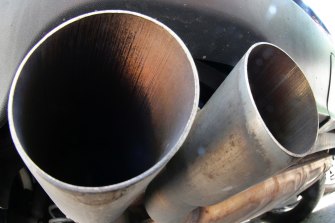
Australian emissions standards from our new cars trails all European nations surveyed by the National Transport Commission. The story may be even murkier.Credit:AP
The issue was crystallised in the recent release of the 2020 National Transport Commission’s annual survey of the emissions intensity for new cars. The survey relies on the cooperation of industry lobby group, the Federal Chamber of Automotive Industries, which last year altered reporting methods in a way that prevented the Commission from making comparisons with previous years.
“It has caused a break in our established methodology and that is unfortunate,†Mandi Mees, an NTC executive, said. “It is what it is, and we have to work with it.â€
Australia’s emissions standards were already worse than 30 European nations assessed by the NTC, and had been flatlining for years.
The FCAI’s main change was to carve out heavy sport-utilities and light commercial vehicles from the broader market of cars and light SUVs.
Another feature was to create so-called “super-credits†that gave some low-emissions vehicles between 1.5 and 3 extra points, although the precise weighting used was not given to the Commission, the report noted.
The Chamber’s data awarded Toyota 15 times more of these “carry-forward credits†than its nearest rival, Mercedes-Benz, with Toyota’s Lexus subsidiary in third place.
Toyota, though, fares less well in that secondary group, given the high pollution rates of such makes as the Land Cruiser with its 260 grams/km CO2 emissions. The Lexus brand is also an outlier for its heavy and high-emitting vehicles.
Tony Weber, the Chamber’s executive director, stands by the new methodology, saying complaints within the sector were “a storm in a tea-cupâ€.
“There was never a heated discussion between us and the NTC†over methodology, Mr Weber said, adding the split of cars and SUVs and credit were “a better way to do it†and in line with international standards.
“This is technology-neutral...it gives members the incentive to put lower-emissions vehicles into the market,†he said, adding the industry’s voluntary goal is to cut annual emissions-intensity by 4 per cent for small vehicles and 3 per cent for heavier ones out to 2030.
A senior Volkswagen spokesman said the company had “reservations about the aspect of the Voluntary Standard that will permit the transfer of credits from comparatively low-emission vehicles to more polluting utes and large SUVsâ€.
“Customers should have access to multiple sources of verified data to inform their purchases, including in the form previously released by the NTC if it so chooses to publish them,†the spokesman said.
The Herald and The Age approached Toyota for comment.
An executive for another major supplier, who requested anonymity because he was not authorised to comment publicly, said the data was skewed to favour Toyota with its hybrid petrol-electric cars over electric vehicles or EVs.
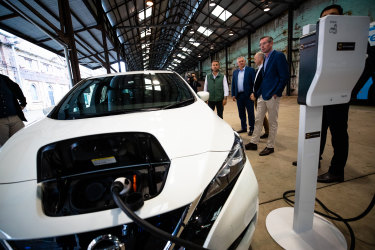
Electric vehicle sales increased by 17 per cent in 2020, the NTC said, reaching 6900 units.Credit:Edwina Pickles
“I don’t think it’s fair,†he said, adding, “Toyota doesn’t have an EV and the world is turning to EVs.â€
Behyad Jafari, chief executive of the Electric Vehicle Council, said the lack of independent data “should ring alarm bells for anyone who cares about transport emissionsâ€, noting other sectors such as the electricity industry had to hand over their pollution data without an intermediary.
Australia’s new passenger cars had an emission intensity of 150 grams of CO2/km in 2020, compared with an average 122 in 2019, the NTC noted. Mr Jafari said Australian standards are more than a decade behind Europe’s.
“It’s a simple and easy thing to fix†if the federal government ordered carmakers to hand over their raw data, as they did in many other countries such as in Europe and New Zealand, Mr Jafari said.
On its own, the NTC would require federal, state and territory governments to agree before it could require the industry to provide the information.
The Commission’s Ms Mees said the lack of data consistency had “been a trigger for us to look at other data setsâ€, such as state registrations, as an alternative to the FCAI’s figures.
A spokeswoman for Deputy Prime Minister, who oversees the NTC, said Barnaby Joyce had not read the report.
“Comparing Australia with small European countries â€" with different geographies and consumer preferences â€" while ignoring similar countries like the United States and Canada is disingenuous and misleading,†a spokeswoman for Energy and Emissions Reduction Minister Angus Taylor said.
Labor’s climate spokesman Chris Bowen said that under Prime Minister Scott Morrison, “Australia is always at the back of the packâ€.
“We’ve got the lowest uptake of electric vehicles in the developed world thanks to Morrison’s scaremongering at the last election, and [its] climate policy vacuum,†he said. “Labor’s tax cuts on electric vehicles will reduce cost of living and emissions, while the Liberals so-called technology approach consists of actively disparaging well-established electric vehicle technology, and scaring off Australian families.â€
The Morning Edition newsletter is our guide to the day’s most important and interesting stories, analysis and insights. Sign up here.
Peter Hannam writes on environment issues for The Sydney Morning Herald and The Age.
0 Response to "Blowing smoke Toyotas emissions advantage splits sector"
Post a Comment